Are your replacement windows only as good as the contractor who installs them? Absolutely. At Adkins & Sons, we’ve spent over 45 years learning that the installation method behind your new window matters just as much as the product itself. When replacing windows, two methods lead the industry: pocket (insert) installation and full-frame installation.
Choosing between full frame and pocket comes down to the condition of your existing windows, your window frames, and what you want the finished project to look and perform like. Understanding the difference between full-frame vs. pocket window replacement is the first step toward getting it right. Here’s what you need to know.
What Is a Pocket Window Installation?
A pocket window installation involves fitting a new window unit inside your existing window frame. We remove the old window sash, hardware, and glass, but the original frame stays in place. This method works when the existing frame is structurally sound and free of rot or moisture damage.
The term “pocket installation” gets used loosely in this industry, and not every contractor means the same thing by it. Here’s how we handle it and why the difference matters.
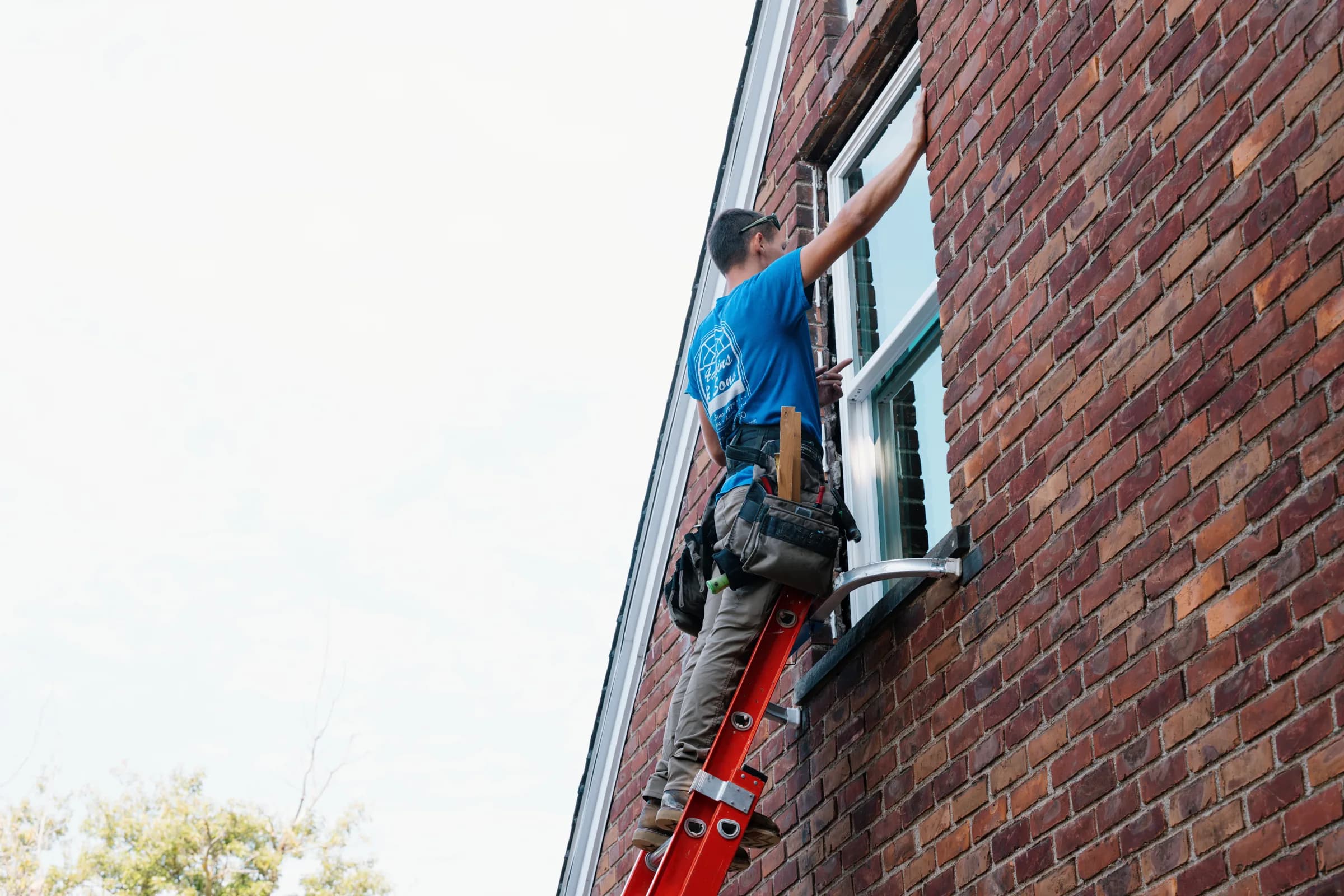
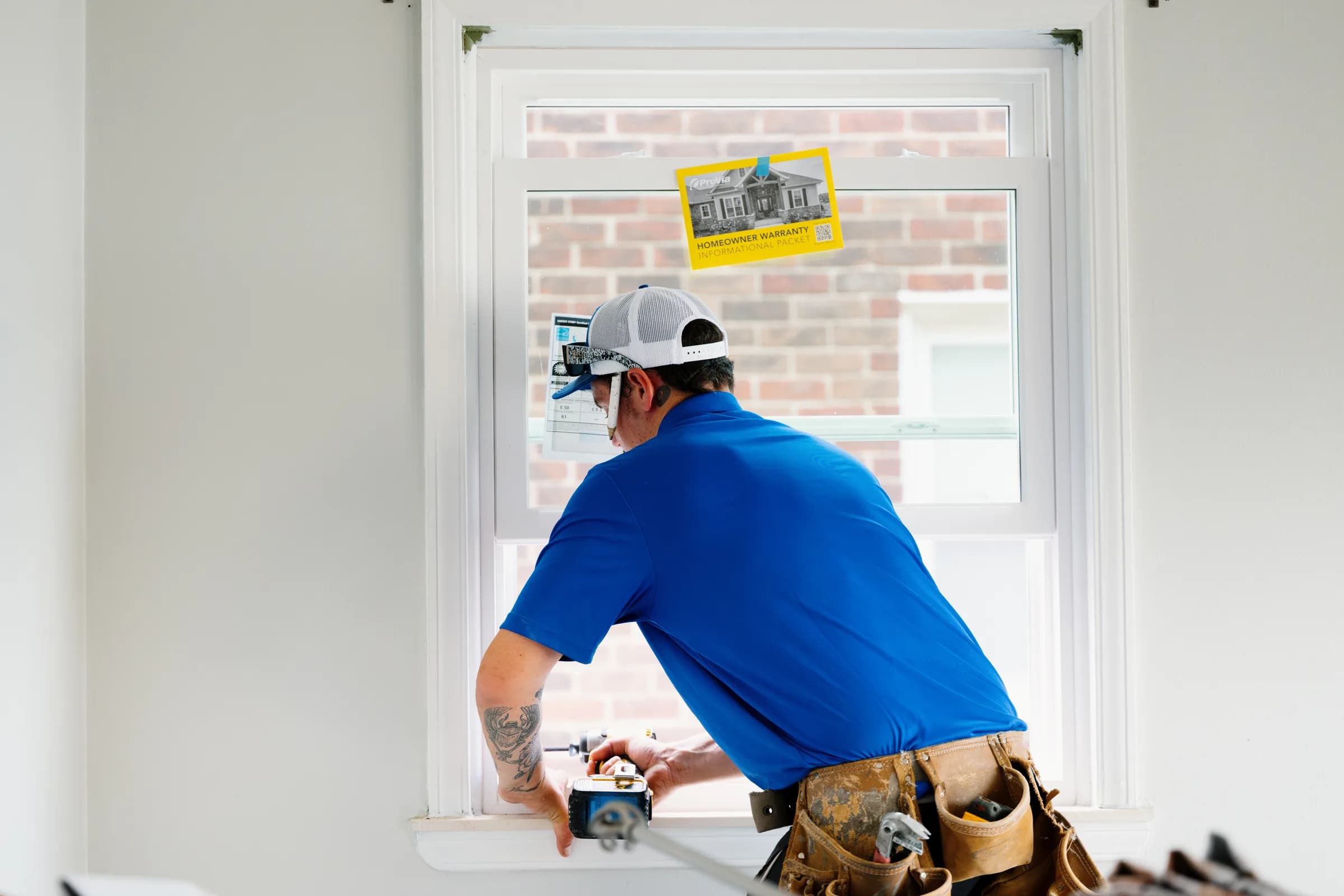
When we perform a pocket installation, we remove the entire existing window from the opening. We then shim and re-level the window opening to make sure it’s perfectly square for the new window. From the exterior, we apply low-expansion foam between the new window unit and the wall frame.
Spraying from outside allows the foam to reach the gap that actually matters for insulation: the space between the window unit and the structural framing of your wall. We finish by applying solar seal caulk along the wrapped coil around the frame to create a tight seal against weather and moisture. That process takes more time than the alternative. It’s also the reason our pocket installations hold up year after year.
The Cut-and-Caulk Shortcut
Some contractors advertise a pocket window replacement but actually perform what’s known as a cut-and-caulk method. They cut the old frame down to the interior trim line, slide the new window in, and caulk around it. It’s generally quicker and costs less, but it skips the most important step: insulating the gap near the wall stud.
Even if those contractors apply foam around the new window frame, they can’t reach the interior wall cavity behind the casing. That deeper gap is often where air and water have been getting in all along. Skipping it leads to poor insulation and three problems that tend to show up within a few years:
- Window performance drops faster than expected
- Seal failure becomes more likely as the frame shifts without proper support
- Energy efficiency falls short because the real source of air infiltration was never addressed
You might save money upfront with a cut-and-caulk installation, but you’ll likely spend more over time in higher energy bills and earlier window replacement.
What Is a Full Frame Window Installation?
A full frame window replacement means complete removal of everything in the opening: the glass, the entire frame, the interior trim, the surrounding trim, the apron, the stool, and any casing. We strip it down to the rough opening of your wall.
This gives us full access to inspect for hidden issues behind the old frame. Water damage, mold, wood rot, and pest activity are often invisible from the surface, and they can spread if left unaddressed during a window replacement. Full frame installation is the only method that lets us uncover and fix these underlying issues before they become bigger problems.
Because we’re rebuilding the entire window opening from scratch, your new window fits into a clean, properly prepared space. You keep the full glass area rather than losing visible light (pocket installations shrink the glass area slightly because the new window has to fit inside the existing frame). Full frame replacement also gives you the opportunity to install new interior trim, stools, and aprons for a complete transformation of the look around each window.
We use the same low-expansion spray foam around the full perimeter of the rough opening, tape the exterior seams to maximize energy efficiency, and redo all exterior cladding. Full-frame window installation costs more than a pocket replacement, but it delivers the strongest result and the best long-term durability.
When Does a Pocket Installation Make Sense?
Pocket window installation depends on one thing above all else: the condition of your existing frame. When the original frame is intact and structurally sound, this method is a cost-effective way to upgrade your windows with minimal disruption.
Older Wood-Frame Windows with Wood Sashes
This is the scenario pocket installation was designed for. If the original frame is solid, we can remove the old window sash and interior components and insert a new window without disturbing the surrounding wall. Homes with wood windows from the 1930s, ’40s, and ’50s often have frames in surprisingly good condition because the wood preservatives used during that era were extremely effective.
Drywall Return Openings
If your window opening has painted drywall running to the edge of the frame instead of traditional wood trim, there’s no existing trim to remove and replace. We install new stop molding and treat it as a pocket installation. Clean and straightforward.
Second-Time Replacements in a Wood Frame
Many homes in Southeastern Michigan have already had at least one round of replacements. If you have a vinyl window sitting inside an older wood frame from a previous installation, a pocket replacement can work well the next time around. This is increasingly common as homes reach their second or third set of windows.
When Is Pocket Replacement Only an Option You Should Skip?
A structurally compromised frame changes everything. Insert replacement (another name for pocket installation) is only an option when the old frame can support a new window reliably. A few specific situations call for a different approach.
Wood windows from the 1980s and ’90s. This surprises many people. Wood windows from that era often deteriorate faster than windows that are 30 or 40 years older. The reason comes down to manufacturing. Older windows used stronger wood preservatives that helped frames last for decades. Those chemicals were phased out for environmental and worker safety reasons (rightfully so), but the result is that current frames on 1980s and ’90s wood windows often show more decay than you’d expect. We typically recommend full-frame replacement for these windows.
Cladded exterior windows. If your current windows have a cladded (wrapped) exterior, fitting a pocket window inside them would mean removing part of that cladding. That compromises the structural integrity of the opening. In nearly every case, full frame is the better path for cladded windows.
Existing vinyl windows or aluminum frames.
Vinyl windows aren’t strong enough to support another window inserted inside them. The material doesn’t have the structural rigidity to hold a second unit. With aluminum frames, some contractors use blocking techniques to make insert windows fit, but it’s not the most reliable long-term method. When you’re replacing vinyl or aluminum windows, full-frame replacement gives you a solid foundation to build on.
When Is Full Frame the Clear Winner?
Full-frame installation is the right call whenever the existing opening needs more than just a new window. That includes:
Visible structural issues
Rot, moisture damage, mold, or pest activity in the existing frame means the opening needs to be rebuilt. Covering up underlying problems with a pocket install only delays (and often worsens) the issue. Full frame replacement lets us address insulation issues and frame damage at the source.
Larger windows and multiple units grouped together
The cost gap between pocket and full frame narrows as you combine larger windows, especially with four or six units side by side. You end up with a significantly better result for close to the same price.
Maximum energy efficiency
Full-frame window replacement allows us to insulate the complete perimeter of the rough opening and eliminate hidden air gaps. With a pocket install, the existing window frame limits how thoroughly we can insulate around the edges.
Style changes and a fresh interior look
Full frame means all new trim, stools, and aprons around every window, plus more natural light from the full glass area. For wood and fiberglass windows, especially, this allows us to match stains and finishes to your aesthetic preferences. It’s a complete transformation rather than just a window swap.
Can You Mix Full Frame and Pocket Installation in the Same Home?
Yes, and we do it regularly. Not every window in your home will be in the same condition. Some openings may have solid frames where the original frame is intact and ready for a pocket replacement. Others may need a full-frame approach due to rot, age, or frame type. We evaluate each window opening individually during your consultation and recommend the right method for each one. There’s no reason to pay for a full frame replacement where pocket will do the job, and there’s no reason to cut corners where a full frame is clearly needed.
Why Installation Method Matters More Than You Think
The window itself is only part of this home improvement project. A premium window installed with the wrong method (or with shortcuts in the right method) won’t perform the way it should. Air leaks, moisture infiltration, and premature seal failure are installation problems, not product problems. That’s why we take every window installation seriously enough to back it with our 15-year labor guarantee. Our factory-trained installers are experienced in both full-frame and pocket window methods, and our lead installer personally visits every job site during installation to make sure our standards are being met.
Published by Adkins & Sons, a family-owned window, door and siding company in Southgate, Michigan since 1979. See our replacement windows