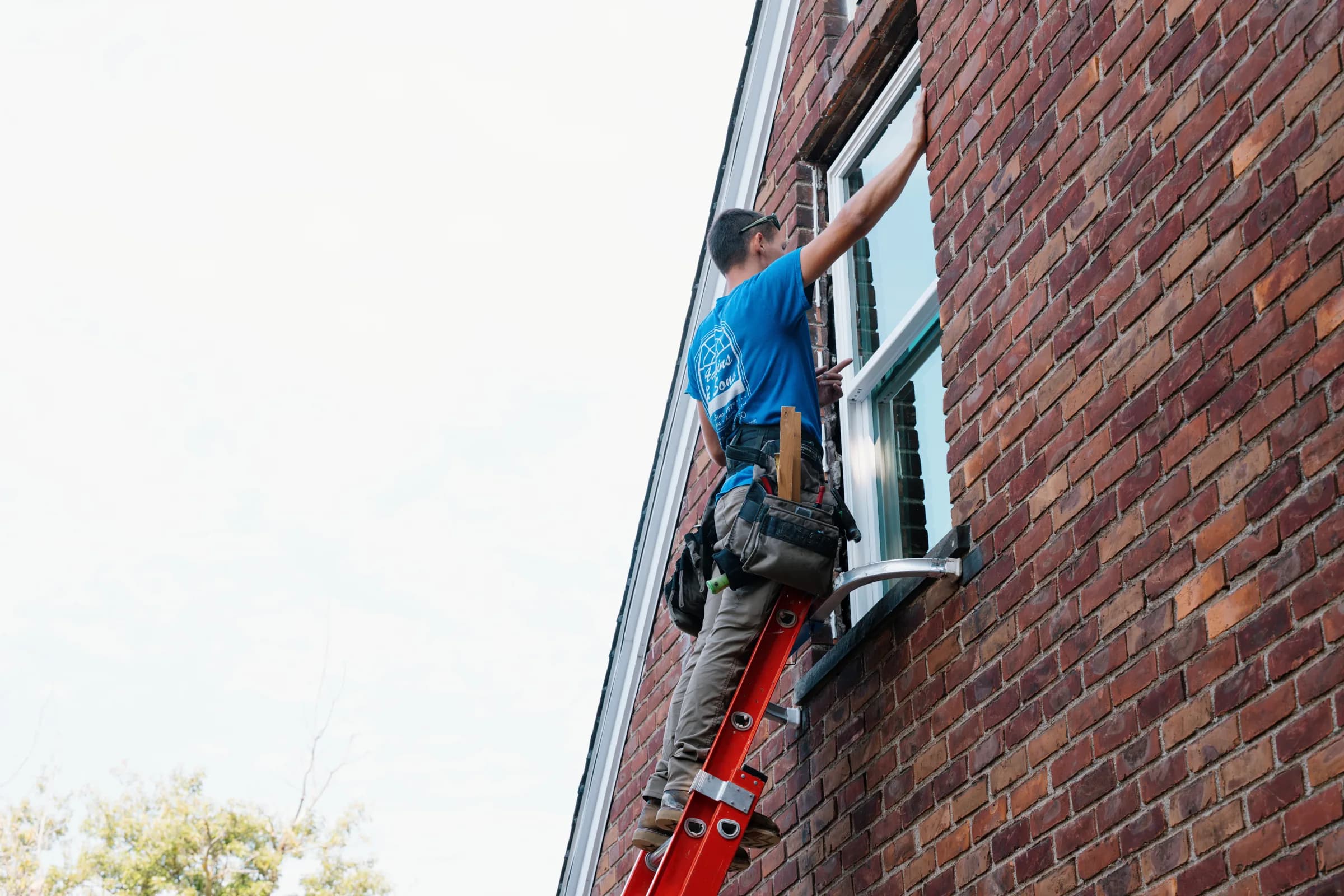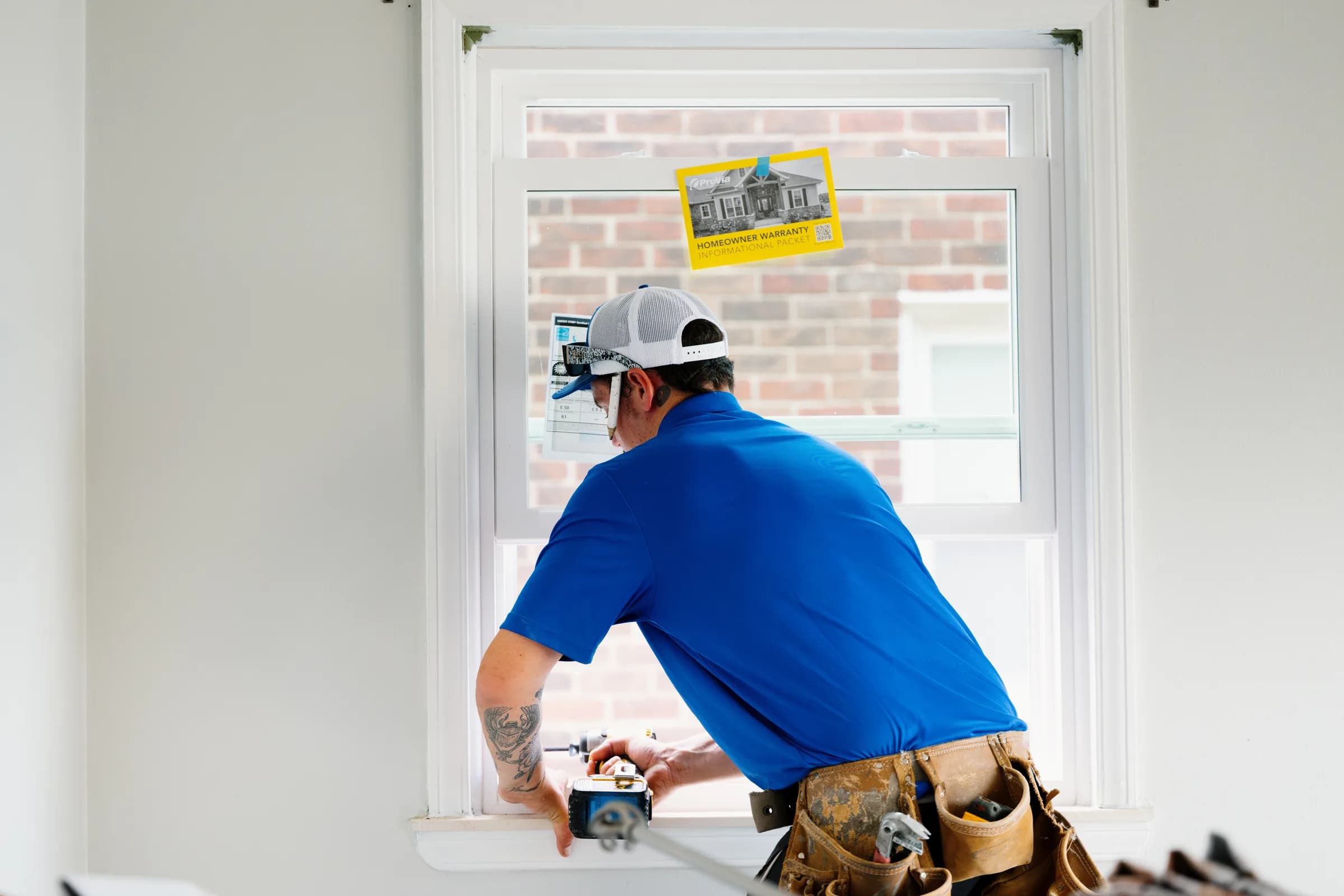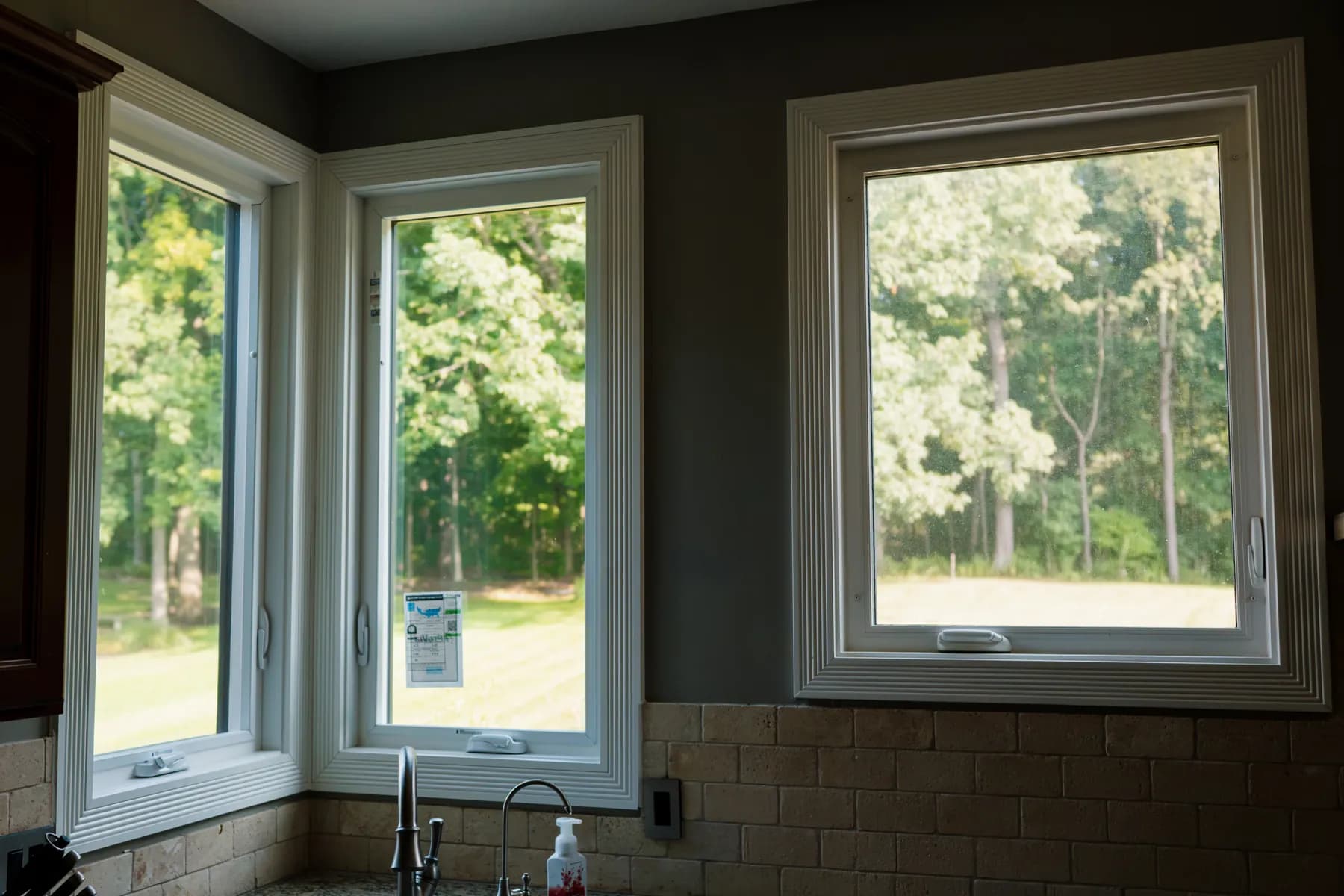
A double-hung has two sashes that slide up and down in one frame, and both tilt into the room so the outside of the glass washes from indoors. A casement is hinged at the side and cranks open like a door, so the whole sash swings clear of the opening. Choose the double-hung when you want the traditional look, nothing swinging outward and easy cleaning upstairs; choose the casement where reaching a sash is awkward, where you want the most air an opening can give, and on the wall the weather hits first.
Both are standard replacement window styles, made in vinyl, wood or fiberglass, and both are ordered to the exact size of your opening. So the decision is not about which window is built better. It is about how each one opens, and what the wall it is going into actually asks for.
How Each Window Opens
The Double-Hung
In a double-hung window, each sash rides on a balance system hidden in the frame, a spring or block-and-tackle mechanism that carries the sash weight so the window moves with two fingers and stays where you leave it. The two sashes meet in the middle at the meeting rail, and that joint does more work than any other part of the window. Locking a good double-hung pulls the two rails together against the weatherstripping, which straightens both sashes and closes the air path in one motion.
Because the sashes slide, they wipe past their weatherstripping rather than compressing into it. A well-built double-hung with tight weatherstripping and a solid meeting rail seals fine that way. It is simply a different kind of seal from the one a casement makes.
The Casement
In a casement window, a crank drives an operator arm that pushes the sash out and pulls it home. There are no tracks to slide in and no balances to carry the weight, and the crank folds flat when you are done, so blinds and shades hang past it cleanly. The lock engages hook points along the frame edge and draws the whole sash inward against the weatherstripping, like pulling a door tight against its seal.
That is why wind works in a casement's favor. A sliding sash has to keep a clearance to slide in, so wind can work past it and rattle it, while a casement has no sliding clearance at all. Wind pressing on the glass presses the sash deeper into its seal, so the harder the weather leans on the house, the tighter the window gets.
Cleaning, Screens and Upkeep
Both sashes of a double-hung tilt into the room, which is the feature owners use most. You wash the outside of a second-floor window standing in your own hallway, and upstairs bedrooms stop being a ladder job twice a year.
A casement cleans a different way. The full swing brings the outside face of the glass within arm's reach from indoors on most sizes, so on the lower floors cleaning stays off a ladder as well.
Screens are the quieter difference between the two. A casement screen sits on the inside face of the frame, out of the weather, where it stays cleaner than an exterior screen ever does, and the sash swings out past it. A double-hung screen sits on the outside, over the part of the window that opens, so it takes the pollen, the grit and the road salt spray directly.
Upkeep is light either way. A double-hung wants a wipe of the tracks and the weatherstripping when you wash the glass. A casement wants a drop of light oil on the operator and the hinges now and then, plus one habit worth keeping: crank it closed before a storm instead of letting the wind slam it.
Where Each One Belongs in the House
Over the kitchen sink is the casement's clearest case. Nobody wants to climb onto the counter to lift a sash, and a fold-away crank opens the window from where you already stand. The same logic covers a stair landing, a window seat, or the wall behind a bathtub: anywhere arms do not reach, a crank does.
Bedrooms above the first floor usually go the other way, because tilt-in sashes keep the cleaning inside the room. So do openings above a porch roof, a deck or a walkway, where nothing should be swinging outward into anyone's way. A double-hung also leaves the wall flat: no crank handle to clear, so blinds hang flat and a couch can sit right under the sill.
Then there is the wall the weather hits. On the windward side of a Michigan house, where winter wind drives snow and rain at the glass for months, a casement tightens where a sliding sash rattles. Proportion matters too: a casement carries a tall, narrow opening cleanly, with no meeting rail cutting across the glass. The double-hung suits the openings most Michigan houses were built with, so replacing like with like keeps the sight lines the street already knows.
Airflow and Egress
On airflow the casement wins outright. Swing the sash fully clear and the entire frame is open air, where a hung window can only ever open part of itself. Angle the sash partway and it becomes a scoop that catches a breeze running along the wall and turns it into the room, which no sliding or hung sash can do at all.
A double-hung has a trick of its own worth knowing. Open the top sash a little and the bottom sash a little and the window becomes a quiet convection loop: warm air slips out over the top rail while cooler air feeds in at the sill. It moves more air than one wide-open sash, and with young children in the house you can vent a room entirely from the top with the reachable sash locked shut.
Egress is worth raising before anything is ordered. A bedroom window often has to open wide enough for someone to climb out and a firefighter to climb in, and your local building department sets what counts. A casement's full swing tends to reach that in a smaller opening, because the whole frame becomes clear opening, while a double-hung gives up part of its height to the sash that is not moving. We measure the openings at the estimate and tell you what the room needs, including whether the job needs a permit.
Mixing Both Styles on One House
Most houses end up with both, and that is usually the right answer rather than a compromise. Double-hungs across the front where the street sees them, casements over the sink and on the weather wall, fixed glass where the view matters more than the airflow. No style wins every opening.
Mixing is not a visual problem when the windows are ordered as one job. Same material, same frame color, same glass, same hardware finish, and from the curb the difference is a crank nobody can see. Where several units sit side by side in one opening, they are ordered as a single engineered unit, so the joints between them are factory-made rather than improvised in the wall.
How to Decide
Walk the house one opening at a time instead of picking a single style for the whole job. A short list of questions settles most of them.
- Can you reach the sash from where you stand? If not, a crank does the reaching for you.
- Is there a porch roof, a deck or a walkway under the window? Then nothing should swing outward.
- Does this wall take the weather first? A casement tightens under wind instead of rattling.
- Who cleans this window, and from where? Tilt-in sashes keep upstairs glass off a ladder.
- Is the opening tall and narrow, or wide and low? Proportion shortens the list quickly.
- Does the room need real airflow, or a window that has to serve as a way out?
If the answers point both ways in the same house, that is normal, and it is what the visit is for. The free in-home estimate is where it gets settled: we measure, we listen to what is bothering you about the windows you have, and you get the full price in writing before anything is ordered. Our own employees do the installation, never subcontractors.
The fastest way to choose, though, is to work the hardware yourself. Our Southgate showroom has full-size windows and doors you can operate: tilt a double-hung sash into the room, crank a casement open and closed, and feel how differently the two lock. That tends to settle the question faster than any description does.
Published by Adkins & Sons, a family-owned window, door and siding company in Southgate, Michigan since 1979. See our replacement windows