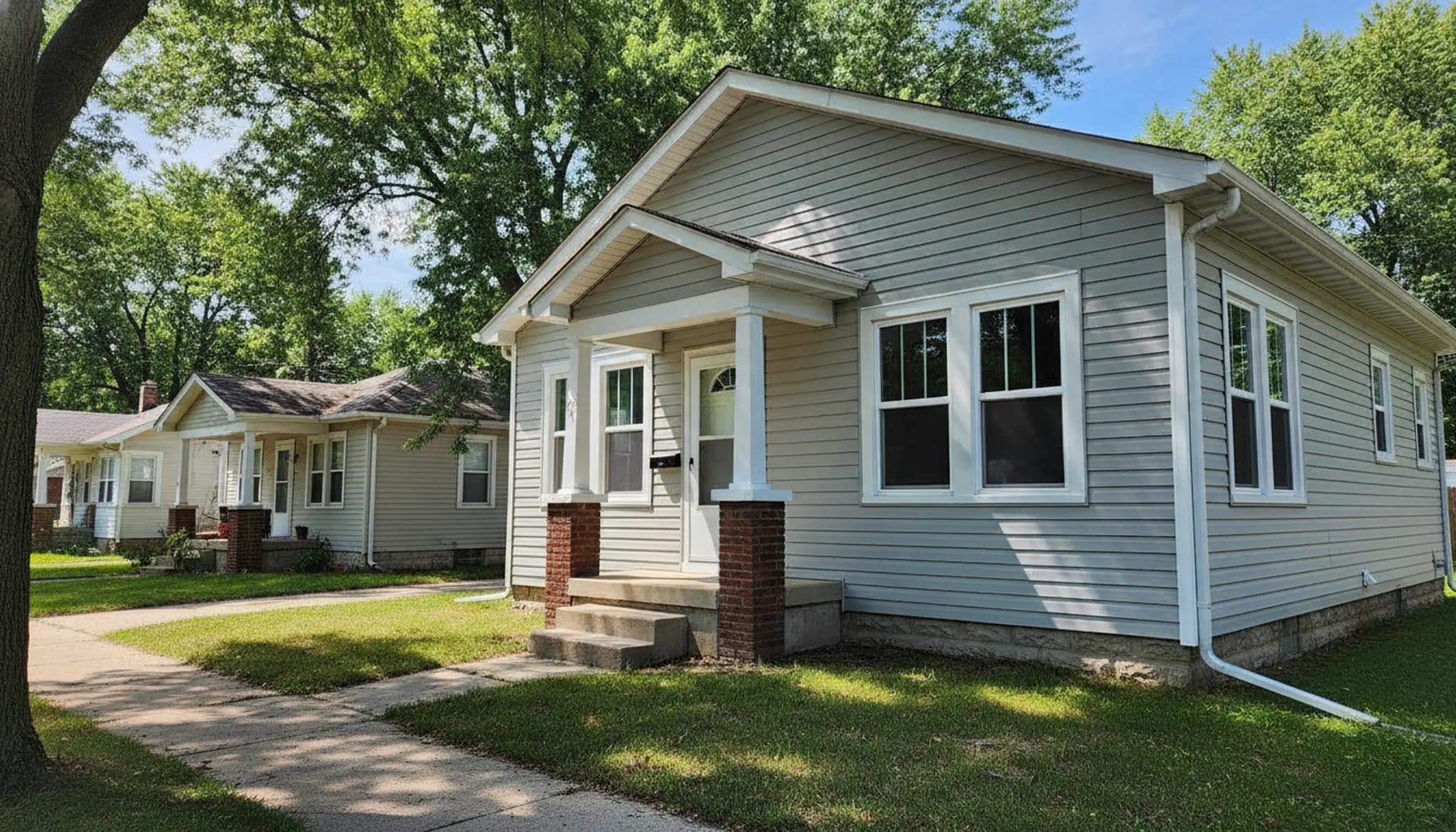
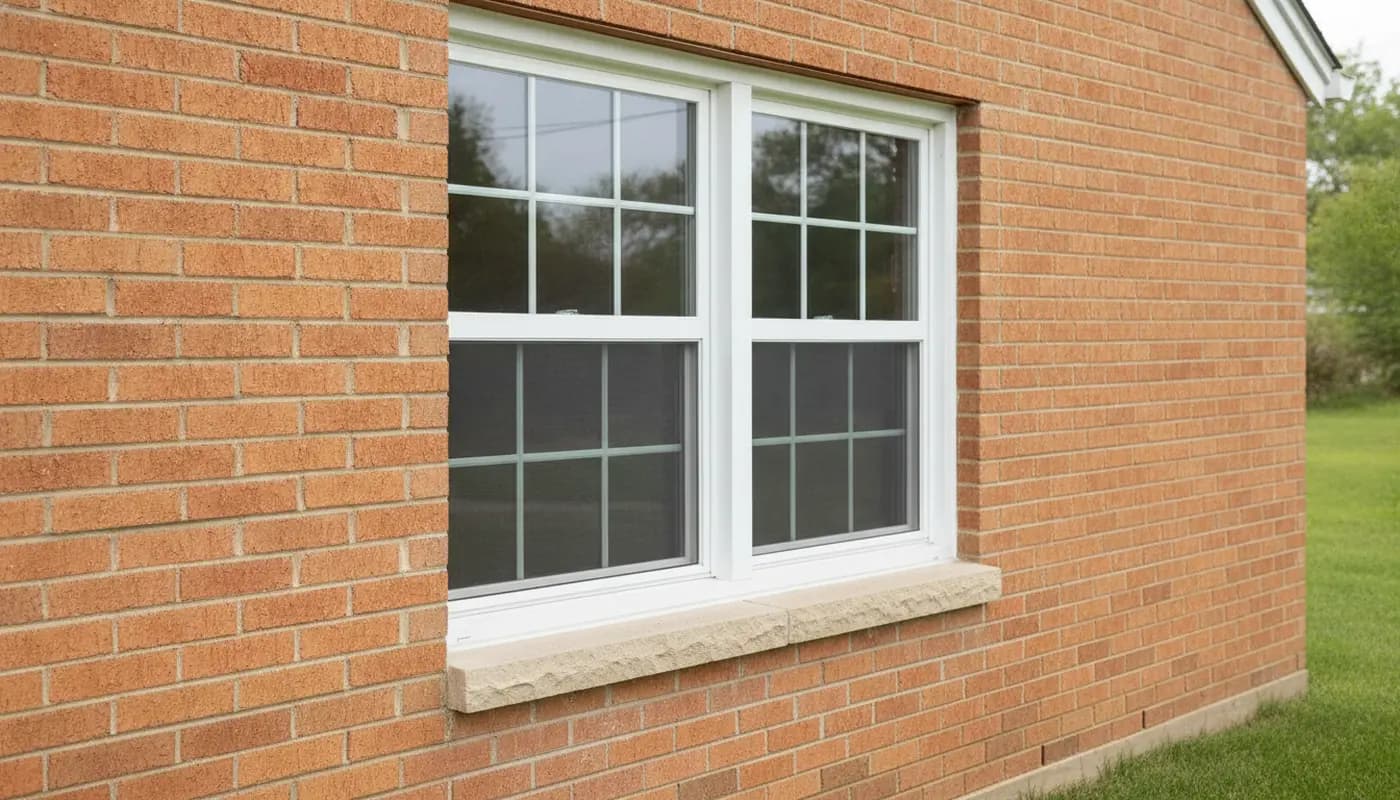
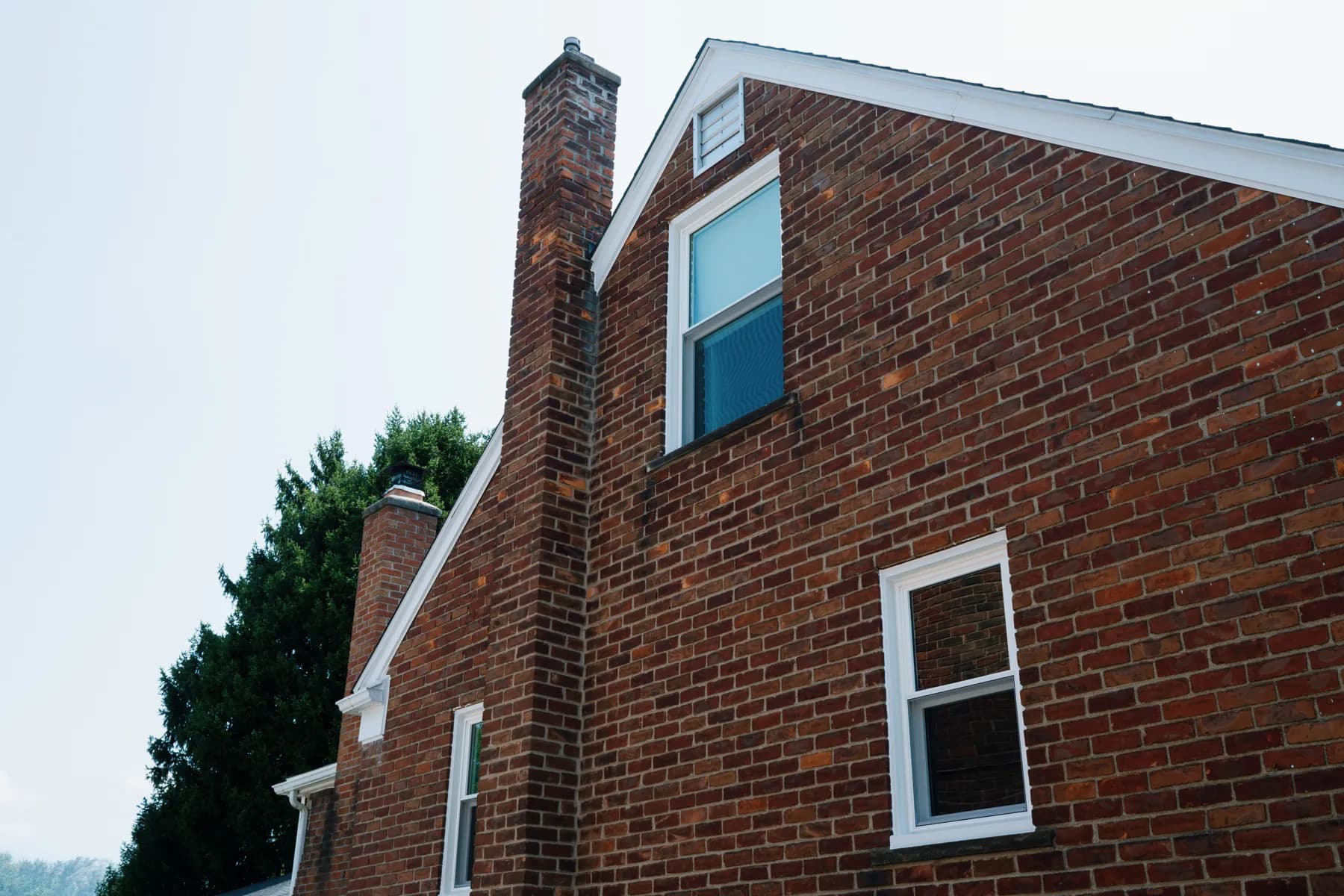
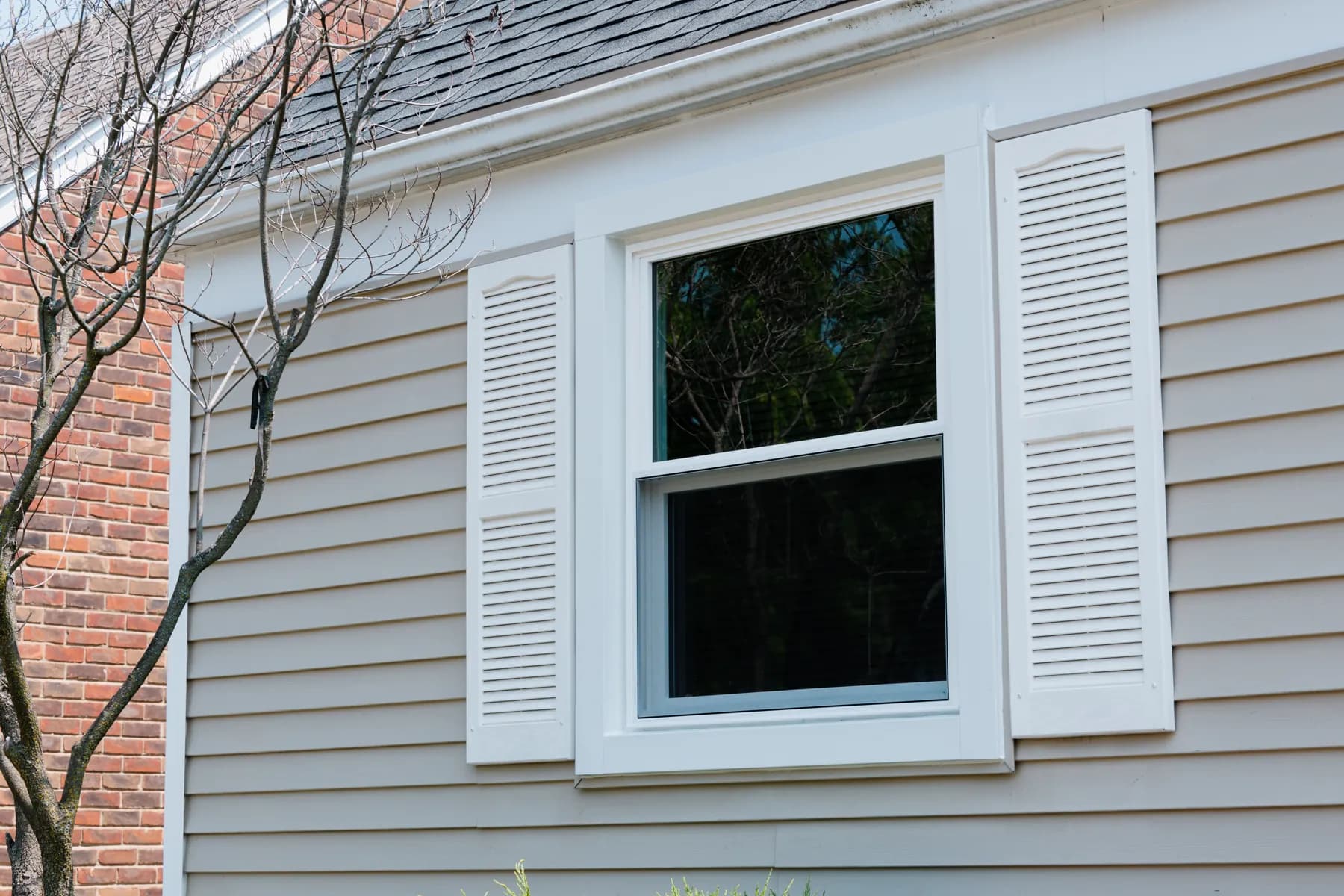
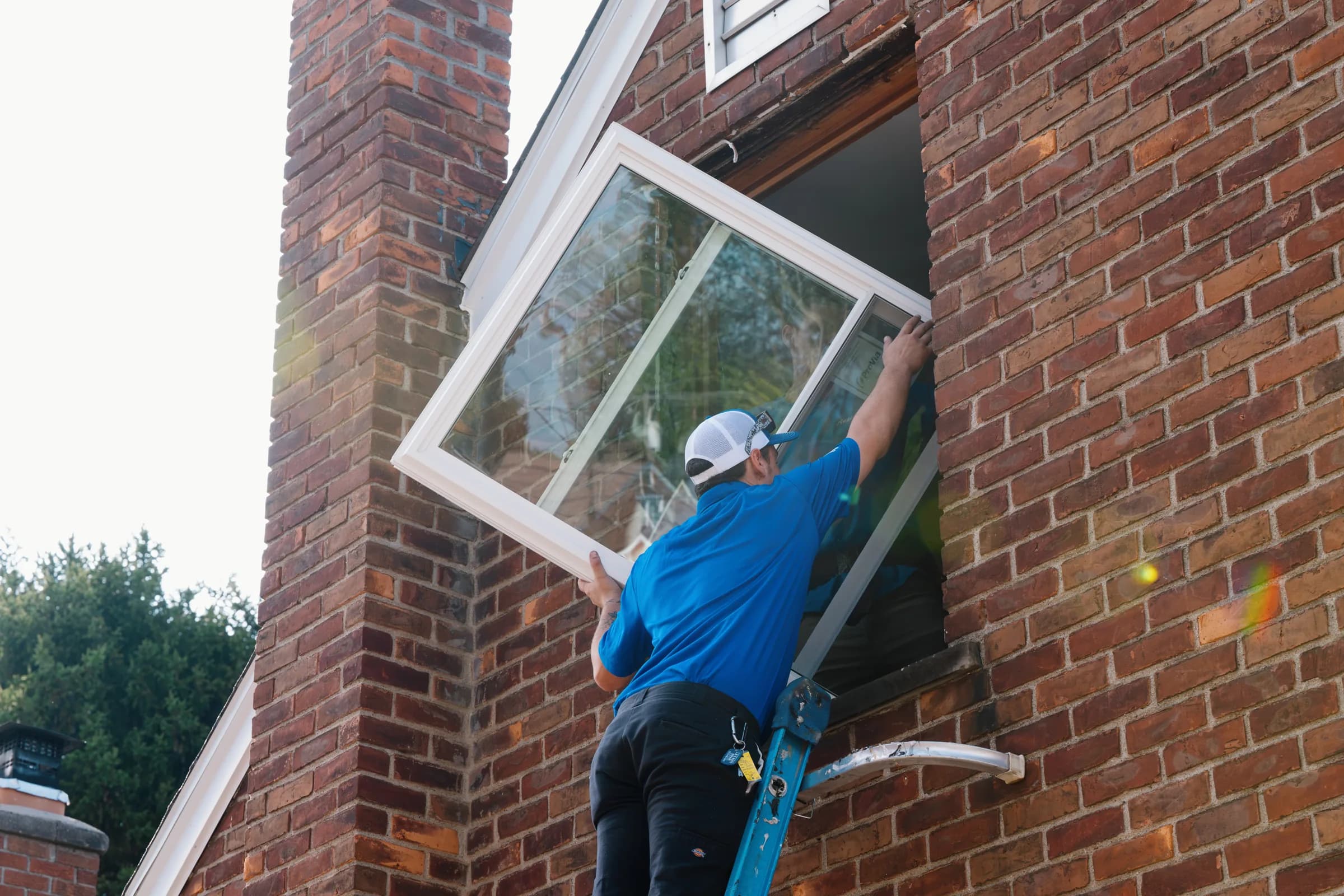
The double-hung is the window most people picture when they picture a window: two sashes stacked in one frame, the bottom one sliding up, the top one sliding down. It has been the default window on American homes for well over a century, which is exactly why a replacement double-hung tends to look like it was always part of the house.
How It Works
Each sash rides on a balance system hidden in the frame, a spring or block-and-tackle mechanism that carries the sash's weight so it moves with two fingers and stays wherever you leave it. Old rope-and-pulley windows did the same job with iron counterweights, which is what the clunk inside an old frame was. When a sash starts dropping on its own or fights you on the way up, the balances are worn, and in an old window that is usually the beginning of the end.
The two sashes meet in the middle at the meeting rail, and that joint does more work than any other part of the window. A good double-hung locks by pulling the two rails together against the weatherstripping, which straightens both sashes and closes the air path in one motion.
Double-Hung or Single-Hung?
A single-hung looks identical from the curb, but its top sash is fixed: only the bottom moves. It costs a little less and has one less moving joint. The double-hung earns its price in two places: the top sash vents warm air out high on the wall while cool air comes in low, and both sashes tilt into the room, so every pane cleans from inside. On a second floor, that second point usually decides it.
The Venting Trick Worth Knowing
Open the top sash a few inches and the bottom sash a few inches and the window turns into a quiet convection loop: warm air slips out over the top rail while cooler air feeds in at the sill. It moves more air than one wide-open sash, and with children in the house you can vent a room entirely from the top, with the reachable sash locked shut.
Living With One
Care is a wipe of the tracks and weatherstripping when you wash the glass. Both sashes tilt inward for cleaning, so there is no ladder in the plan and no leaning out over a sill. Grilles between the glass keep the divided-light look of an older home without giving you twelve little panes to squeegee, and the sill stays clear enough for plants, blinds, and furniture pushed right up against the wall.