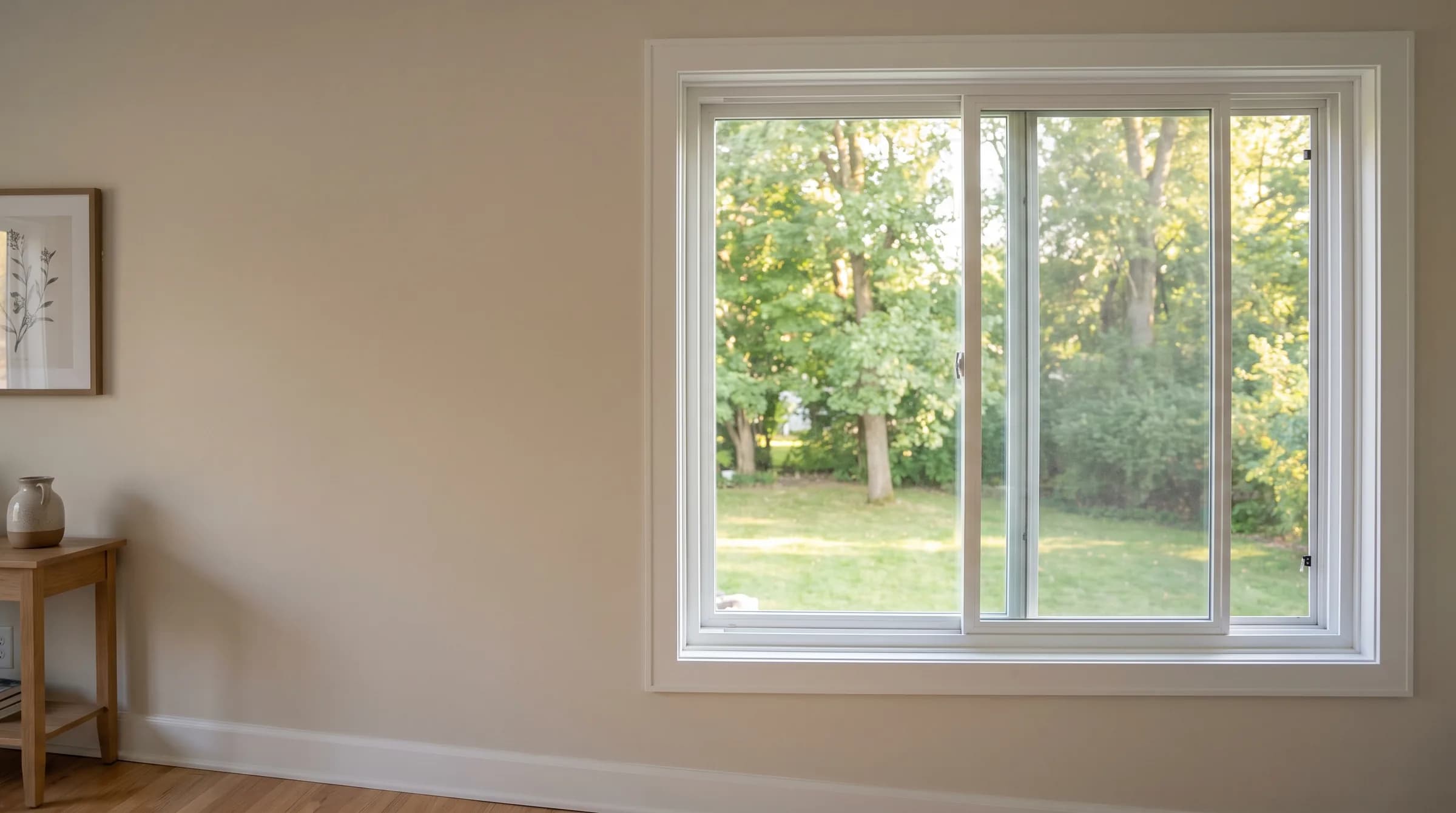
A sliding window is a double-hung rotated ninety degrees: the sashes ride sideways in a track instead of up and down in a frame. That one change removes the balance hardware entirely, because gravity stops fighting the sash, and it is why sliders are the simplest operating window built and usually the best value per square foot of opening.
How It Works
Each moving sash rolls on small wheels along a track at the sill, and the two sashes interlock where they meet, closing the air path at the joint. There is nothing to crank, nothing to lift, and no spring under tension anywhere in the frame. Most designs let the sashes lift out of the track entirely, so the outside of the glass cleans from inside the room, the same trick as a tilt-in double-hung by a different route.
The Geometry Argument
Every other operating window wants an opening taller than wide. The slider is the one built for the opposite: the long, low openings in ranches, walkouts, and basements, and the wide spans where a double-hung would look like a pair of postage stamps. In an egress basement window, the same geometry earns its keep in a more serious way: a slider gives up half its width as clear opening without needing swing room inside the window well.
What It Trades Away
Honesty about the style: a sliding seal is a wiping seal, like a double-hung's, not the compression seal of a casement. A well-built slider with an interlocking meeting stile and good weatherstripping seals fine; it simply is not the tightest window made. What you get back is a window with almost nothing in it to wear out, at a friendlier price, in proportions nothing else handles.
Living With One
The track collects what gravity brings it, so the whole maintenance plan is a vacuum nozzle and a damp rag along the sill a couple of times a year. Rollers can be adjusted if a sash ever drags. Because nothing projects in or out, a slider is the window for the wall behind the couch, over the workbench, or along a walkway where a swinging sash would be in the way.