For most Michigan homes, vinyl is the sensible answer: it insulates well, it never needs painting, and it comes in a wider range of colors and hardware than anything else we install. Fiberglass is the stronger frame, and it earns its place on wide openings, on the walls that take the weather, and when you want a slim frame that looks like painted wood. Both are low upkeep, both are installed by our own employee crews, and both carry the same 15-year labor warranty on the work.
After that, the choice comes down to a few plain questions: how the frame behaves through a Michigan year, how much upkeep you are willing to do, what you want the window to look like, and what the opening itself is asking for. Here is how the two materials compare on each one.
What Vinyl and Fiberglass Actually Are
Vinyl
A vinyl frame is extruded plastic, and it is hollow by nature, with small sealed chambers running the length of the profile. That sounds like a weakness and it is really the opportunity: a good vinyl window divides that space into insulating chambers and fills the ones that matter, so the frame itself does real work instead of just holding glass. The color is mixed through the extrusion rather than sprayed on the face, so a scrape from a ladder does not show white underneath. We install two vinyl lines, Pella and ProVia, both welded at the corners rather than screwed together and covered with a gasket.
Fiberglass
Fiberglass is glass fiber set in resin. The fiberglass windows we install are Pella, made from a five-layer composite, and they come as Impervia and Duracast frames finished to look like painted wood. Because the material is stiffer than vinyl, the frame can be slimmer and still carry a big piece of glass. It does not warp, swell, rot or rust, and there is no finish on it to scrape and repaint.
How Each One Handles a Michigan Year
Michigan is hard on windows: lake-effect snow, hard freezes, humid summers, and afternoon sun on the south and west walls. What wears a window out is the cycle rather than any one bad day, the frame growing and shrinking against its own seals season after season.
Fiberglass is the material built for that cycle. It moves at close to the same rate as the glass it holds, so a hard freeze is not working the seal loose the way it does on other frames, and the composite takes the temperature swings without warping or cracking. That is the clearest reason to choose it.
Vinyl moves more, which is exactly why the way it is built matters so much. A frame and sash welded into one piece, reinforced where the span is longest, stays square through the same winters. A window screwed together at the corners and hidden behind a gasket does not, and that is most of the difference between good vinyl and cheap vinyl.
Summer is the other half of the year. Solid vinyl carries its color all the way through, so the sunny side of the house does not chalk off the way a coated frame does. On both materials the glass does more about summer heat than the frame does: a low-E coating turns heat back where you want it in both directions, and that is a decision you make separately from the material.
Upkeep on Each Material
Neither one asks much of you. Both are wash it and forget it: soap and water once a year, a look at the weatherstripping, and that is the list. Neither needs painting or staining, which is the reason most people leave wood behind in the first place.
What ages on either window is usually not the frame. It is the seal at the edge of the insulated glass unit, which is why the spacer between the panes matters more than most of a brochure does, and why both manufacturers warrant the sealed unit separately from everything else. That is also the honest answer to how long a replacement window lasts.
One difference is worth settling before you order: vinyl cannot be repainted later. The color runs through the extrusion, which is why a scratch does not show, and it is also why paint will not stick to it properly. Pick the color at the order, because that is the one choice that is permanent.
Color, Grilles and the Look from the Street
Vinyl has the longer list. Pella runs white, almond, fossil, beige and black, plus a laminated exterior color over a white interior when you want dark outside and light inside. ProVia adds sandstone, bronze, woodgrain finishes and a long list of painted exteriors. Grilles can sit between the panes where there is nothing to dust, and blinds can be sealed inside the glass unit, though it is one or the other and not both.
Fiberglass wins on profile. A slimmer frame leaves more glass in the same opening, which reads as a bigger view from inside and a lighter frame from the curb. The finishes are made to closely resemble a natural wood frame, so fiberglass is where people land who want the wood look with nothing to refinish. If the inside has to be real stained woodgrain, that is a wood window and a different conversation.
Which Houses Suit Which Material
Most of the homes we replace windows in are well served by vinyl. The exceptions are specific rather than vague, and they usually come down to the opening itself or the wall it sits in.
- Vinyl, for standard openings, a color you want matched across the whole house, and a plan to do the worst rooms first and the rest in a later season.
- Vinyl, when the color range decides it, or when you want blinds sealed inside the glass.
- Fiberglass, on wide or tall openings where a slim frame leaves more glass.
- Fiberglass, on the wall the weather hits first, and on a house with nothing sheltering it.
- Fiberglass, when you want the painted or stained wood look outside with no upkeep to go with it.
- Fiberglass or wood, if your house sits in a historic district with rules about frame profiles.
Cost is part of it too, and we will be straight about it: vinyl is the least expensive of the three materials we install, and fiberglass sits between vinyl and wood. We do not publish a number per window, because cost tracks the size of the opening, the glass package, the color and grille choices, and what the crew finds once the old unit comes out. You get the full number in writing at the estimate, before anything is ordered.
How to Decide Between Them
Work through it in this order, and the answer usually picks itself. We install all three materials, so which one you land on is not a sales question for us.
- 1Decide what the inside has to look like. Real stained woodgrain rules both of these out. Anything else keeps both in.
- 2Look at the opening. Wide, tall or mostly glass points at fiberglass.
- 3Look at the wall. The side that takes the weather is where fiberglass earns its keep.
- 4Pick the color. If the color you want lives in only one of the two, that settles it.
- 5Then choose the glass package, which changes how a room feels more than the frame material does.
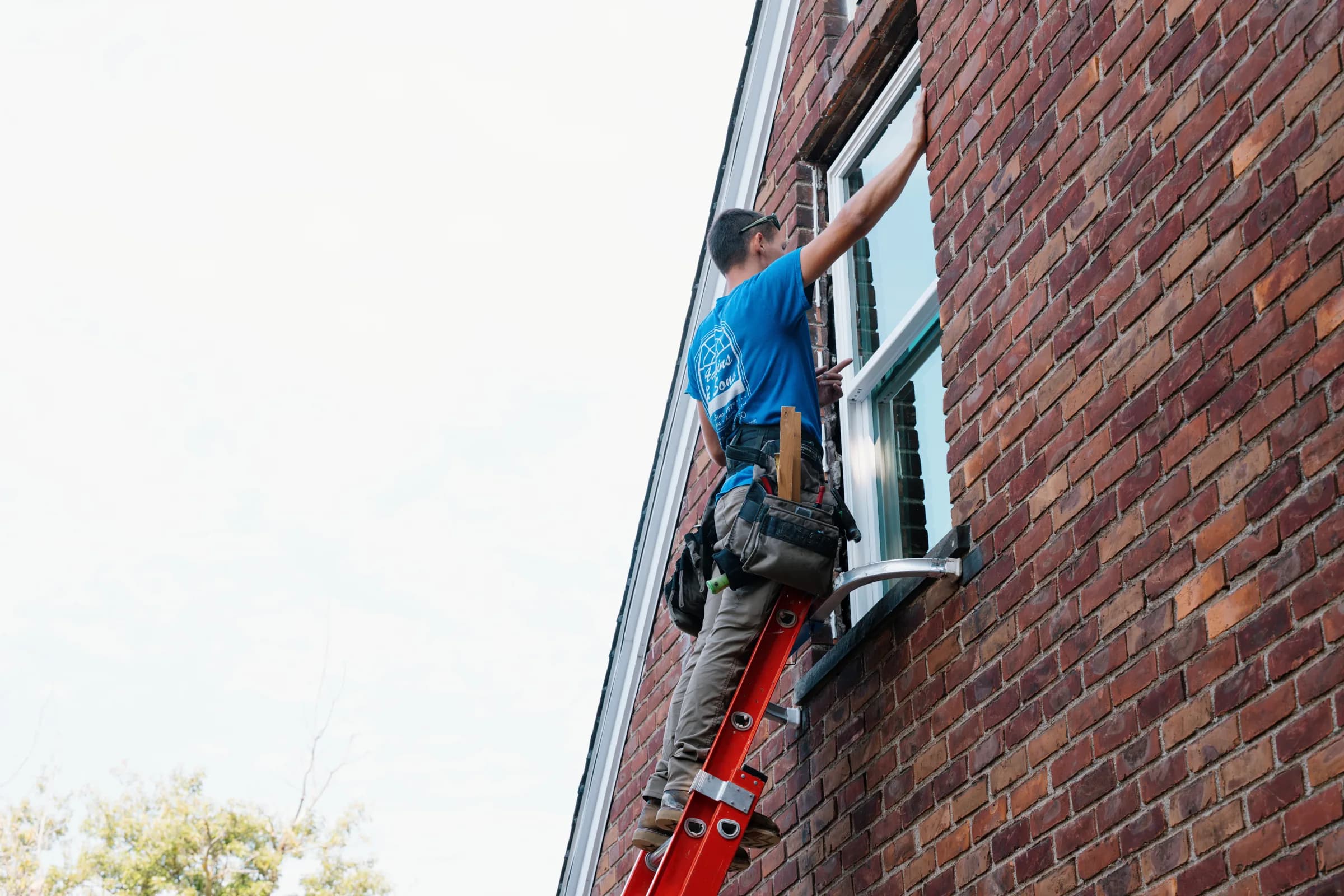
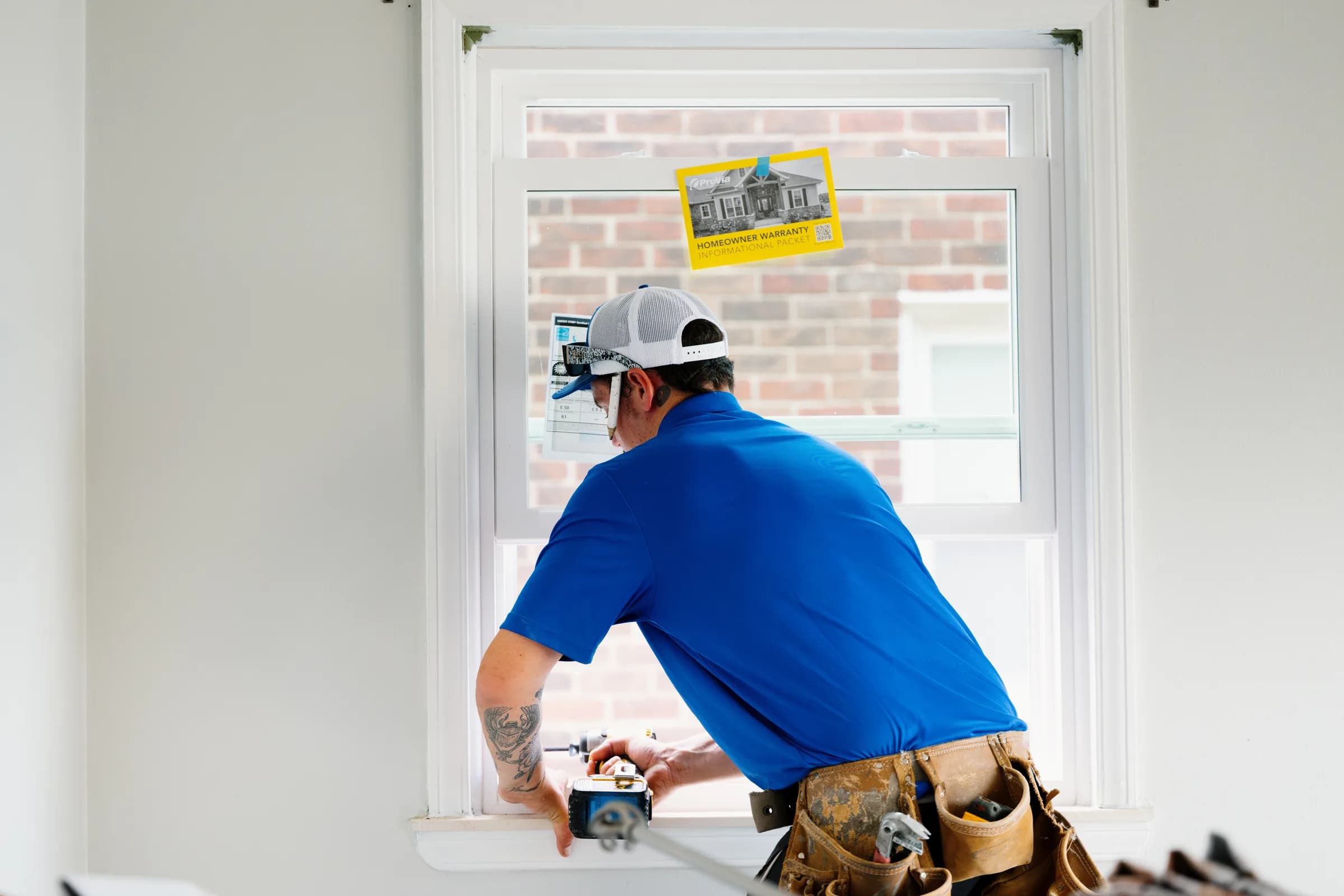
Whichever material you land on, every window is measured twice, built to the exact size of your opening, and installed by our own employees rather than subcontractors, with the same 15-year labor warranty on the work. Book a free in-home estimate and you get your price in writing before anything is ordered. Before that, come to our 4,000 sq. ft. showroom in Southgate, where full-size vinyl and fiberglass windows are set up for you to open and close, and make the call with the real thing in front of you.
Published by Adkins & Sons, a family-owned window, door and siding company in Southgate, Michigan since 1979. See our replacement windows