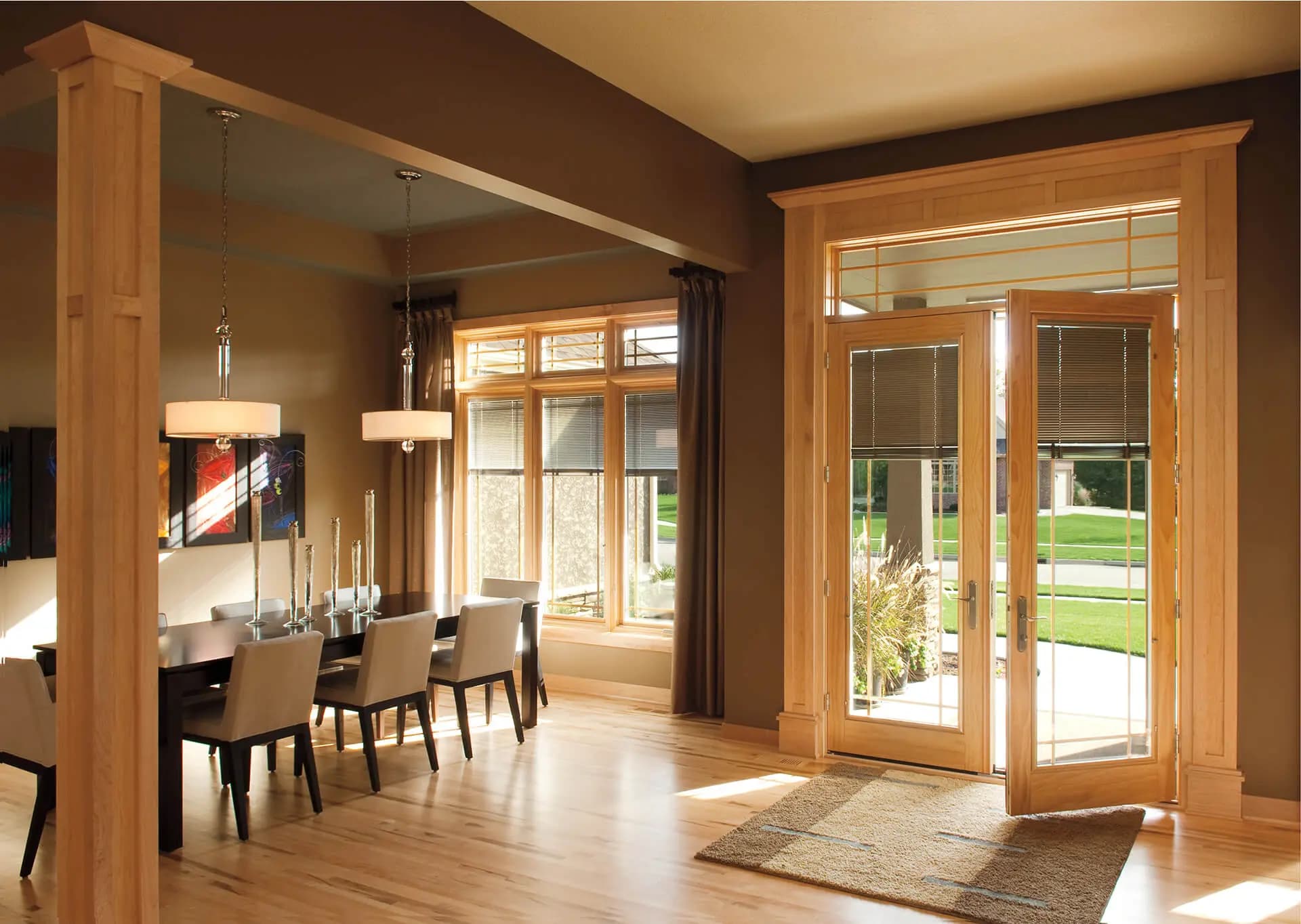
A hinged patio door, sometimes called a garden door, is a glass door that behaves like a door: hung on hinges, swinging on a frame, closing by compression. It usually arrives as a pair of glass panels, one that swings and one that is fixed, and it is the answer for people who want the light of a patio door with the feel and seal of a proper entry.
Why the Seal Is Different
A sliding panel has to keep a running clearance from its track, and its seals wipe rather than press. A hinged leaf has no such truce to keep. Closing it pulls the slab against weatherstripping on all four sides, and the latch holds it compressed there, which is the same sealing mechanism as the front of your house. On a wall that catches winter wind off the yard, that difference is one you can feel from the couch.
The Swing Question
The leaf can hinge on either side and swing into the room or out over the patio, and the right answer depends on the furniture inside and the traffic outside. An out-swing leaf never argues with the dining table; an in-swing never fights the grill. It is a five-minute conversation at the estimate and worth having before ordering, because it is built into the unit rather than adjusted later.
Hinged or Sliding, Honestly
Choose hinged for the tighter seal, the fully cleared opening, and the way a swinging door feels. Choose sliding when there is no room for a swing on either side, or when the goal is the widest possible glass in three or four panels. The glass, the blinds-between-panes option, and the warranty are the same either way, so the decision is about the wall and the room, not the spec sheet.
Living With One
Treat it like the entry door it secretly is: a drop of oil on the hinges now and then, a wipe of the weatherstripping when you wash the glass, and the threshold kept clear of grit. With blinds sealed between the panes there is nothing hanging on the door to swing, bang, or fade.